Case Study Lewisham: Improving Continence Product Choice for Patients with Dementia
11/09/2026
6 min read
A Collaborative project between Ontex and NHS Bladder, Bowel & Pelvic Health Team
Background Many NHS trusts face increasing pressure to reduce continence product costs, leading some trusts to remove pull-up pants entirely from formularies. However, for patients with dementia and cognitive impairment, pull-ups can be essential for independence, dignity, and compliance. Ontex partnered with the Bladder, Bowel and Pelvic Health team in Lewisham and Greenwich NHS Trust to explore whether a structured, extended sampling process could support better product choice, reduce waste, and maintain clinical standards, without resorting to blanket bans.
Key Challenges Identified Cultural preference for pull-ups: Many patients buy their own while waiting for referral and become attached to them. Many family members often go straight for pull-ups for their loved ones and don’t want any changes.
Dementia-specific needs: The link between Dementia and Incontinence is quite broad. Dementia affects the messages received to the brain and also memory. When this happens many Dementia patients can forget how to use the toilet, or simply not register that they need to go. There can also be a disconnect between feeling the urge and knowing the steps needed to go to the toilet.
“We have seen that a lot of people with dementia don’t want to use pads as they don’t quite recognise their uses and it is something foreign to them… we’ve seen people hiding them in the fridge or throwing them out the window.” – Myra
Cost pressures: Some trusts removed pull-ups entirely, despite clinical need. This is due to mounting budgetary constraints within the NHS, seeing Communities and Trusts reducing products from 4 to 3 a day and relying on patients or family to purchase the remaining numbers that are needed. Trial limitations: The team knew that they needed to find a balance between the amount of pads that were needed to do the trial correctly and keeping costs within boundaries. Sending one pad isn’t enough to assess suitability; sending a month’s supply is costly and wasteful. Resistance from families and patients: Sometimes families of patients with Dementia can cling to having pull up pants or products and are reluctant to allow any changes to be made.
“It’s extraordinary how much work goes into supporting people to come off pull-ups without a blanket ban.”
The Extended Sample Trial It was agreed that Ontex would support a trial for an enhanced sampling process. This process would allow patients to trial products properly over 4–5 days, including:
Shaped pads
Slips
Pull-ups
Day and night combinations This approach ensured patients could make informed choices based on comfort, dignity, and clinical need. Phase One Results
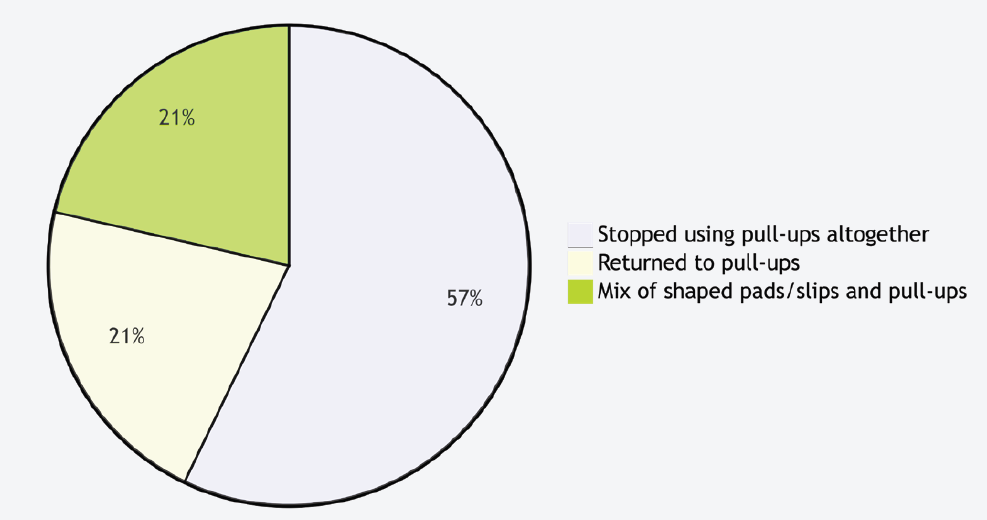
Product Outcomes for 14 patients,As you can see, 3 patients went back to pullups, 3 went to mixed shaped pads and pullups and 9 stopped using pull ups altogether and went to alternative products.
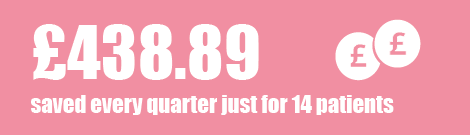
For the 11 patients who changed or mixed products: The prescriptions for patients who moved, or part-moved, to alternatives to pull up pants cost £731.62 for a three month delivery cycle This equates to an approximate saving of £438.89 for this patient group per three month cycle. In terms of roughly equivalent costs for average sized, and average absorbency, pull up pants to replace alternative products in the same group of patients comes to £1170.51 Patients moved to clinically better products that were the right fit for them rather than just a standardised product. Products were trialled properly, reducing waste as well as costs.
“They are now on clinically better products and using products they are happy with.”
Why This Matters for Dementia Care As dementia progresses, patients often become bedbound and can no longer manage pull-ups. Early, supported transitions prevent distress, improve skin health, and reduce inappropriate product use. “As patients go further down the dementia journey, they can’t use pull-ups. Changing them over becomes harder.” Myra Ongoing Work The community service now has a four-day extended sample process in place and three new patients are currently trialling products. One person has already moved off pull-ups and two are awaiting follow-up trials. Reducing the amount of products used, not only has an impact on costs, but also an impact on the environment. If this principle was used in all community services, it would mean less product wastage and delivery trucks on the roads.
The team aims to scale this approach longterm. “It’s a small, simple project, but really positive, and it can stop Communities from making blanket decisions.” – Myra
Future Opportunities
There is the potential to use the Home Delivery Service to streamline delivery and logistics
Ensuring no financial disadvantage for trusts or patients
Embedding extended sampling as a standard pathway
Reducing resistance through education and family engagement “If you give people a proper try of these products, we can get them onto the right products and save costs and dignity.”
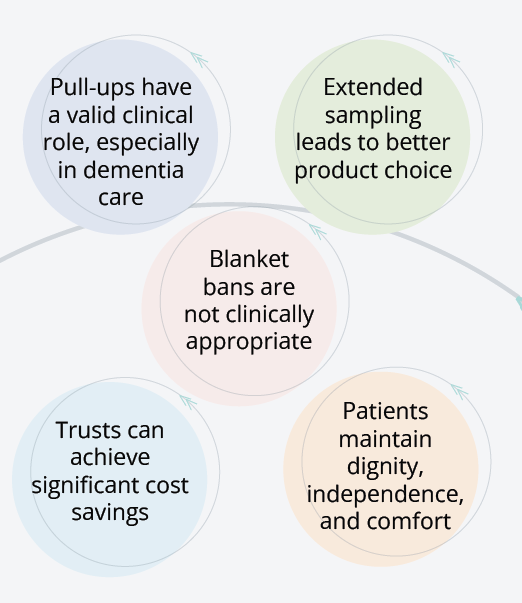
Conclusion This project demonstrates that:
Ontex’s partnership with Bladder, Bowel and Pelvic Health services shows how thoughtful product trials can transform outcomes for patients and services alike.