

Garder une peau saine au quotidien : les conseils pratiques du Dr Maria Panourgia
«De nombreux patients souffrent en silence, non pas parce que l’aide n’existe pas, mais parce que la gêne empêche la conversation.»
Saviez-vous que les problèmes de peau sont fréquents chez les personnes vivant avec l’incontinence ?
Nous avons interrogé Dr. Maria Panourgia, gériatre consultante au Milton Keynes University Hospital, afin d’obtenir des solutions simples et efficaces pour préserver la santé de la peau.
Découvrez ce que recommandent les experts.

Choisir le bon produit d’incontinence pour protéger la santé de la peau
Fiona Ecarnot: Quels conseils donnez-vous aux patients pour choisir un produit d’incontinence afin de protéger leur peau ?
Dr. Maria Panourgia: De nombreux patients ont déjà une expérience des produits absorbants, souvent acquise lors de la prise en charge de jeunes enfants. Les principes n’ont pas changé. Le confort est essentiel. Le produit ne doit pas être encombrant, doit absorber efficacement l’humidité et permettre une liberté de mouvement.
Pour les personnes mobiles, les produits de type pants sont souvent la meilleure option. Ils sont faciles à utiliser et procurent une sensation plus naturelle, comparable à celle de sous-vêtements classiques. Pour les personnes alitées ou à mobilité réduite dépendant de soignants, des produits faciles à mettre en place et à retirer sont plus adaptés.
L’ajustement est essentiel. Les produits doivent être bien ajustés, sans être trop serrés ni encombrants. Des produits trop volumineux peuvent créer des points de pression et augmenter le risque de lésions cutanées. L’absorption est tout aussi importante : l’urine doit être absorbée et retenue à l’intérieur de la protection afin que l’humidité ne revienne pas au contact de la peau.
Enfin, la couche en contact direct avec la peau doit être respectueuse de celle-ci : hypoallergénique et respirante. Lorsque la peau peut respirer, la température reste plus basse, ce qui limite la prolifération bactérienne — un élément essentiel pour prévenir les infections.
Pourquoi l’utilisation d’un produit inadapté peut-elle endommager la peau ?
Fiona Ecarnot: Comment l’utilisation d’un produit inadapté — comme des protections menstruelles — peut-elle entraîner des complications cutanées ?
Dr. Maria Panourgia: Les protections menstruelles et les protections urinaires sont conçues pour des usages très différents. Les produits menstruels sont destinés à absorber des fluides plus épais, comme le sang, qui se comporte différemment de l’urine. L’urine est beaucoup plus liquide et nécessite un mécanisme d’absorption différent.
Les protections menstruelles ne sont pas conçues pour absorber le volume d’urine ni pour empêcher l’humidité de revenir au contact de la peau. Cela peut entraîner des fuites, des odeurs et une exposition prolongée de la peau à l’humidité. De plus, l’urine a un pH plus élevé que celui de la peau. Les protections menstruelles ne sont pas conçues pour gérer ce déséquilibre du pH, ce qui peut altérer la barrière cutanée et provoquer des irritations ainsi que des dermatites.
Les protections urinaires, en revanche, sont spécialement conçues pour absorber l’urine tout en respectant le pH naturel de la peau. La peau est un système vivant et elle a besoin de protection.
Malgré cela, environ 36 % des femmes utilisent encore des protections menstruelles en cas d’incontinence urinaire. Cela s’explique souvent par la stigmatisation, la gêne ressentie lors de l’achat de produits urinaires ou des préoccupations liées au coût. Cependant, à long terme, le traitement des infections cutanées et des dermatites est bien plus coûteux — physiquement comme financièrement — que l’utilisation du produit approprié dès le départ.
Le rôle des matériaux respectueux de la peau et des soins protecteurs
Fiona Ecarnot: Existe-t-il des avantages à utiliser des matériaux respectueux de la peau ou des composants protecteurs comme le zinc ?
Dr. Maria Panourgia: Absolument. La protection de la peau est une tâche quotidienne et continue pour les personnes souffrant d’incontinence urinaire. L’humidité constante peut provoquer une macération, des irritations et une dermatite associée à l’incontinence. Les environnements chauds et humides favorisent également la prolifération des bactéries et des champignons, rendant les infections plus probables et plus difficiles à traiter.
Les crèmes barrières — en particulier celles contenant de l’oxyde de zinc — sont essentielles. Elles créent une couche protectrice qui protège la peau de l’humidité et des irritations. Les crèmes hydratantes sont également importantes pour maintenir la peau résistante et en bonne santé.
La prévention est toujours plus simple que le traitement.
Soins quotidiens : que devraient faire les patient·e·s et les aidant·e·s ?
Dr. Maria Panourgia: Les protections doivent être changées dès qu’elles deviennent humides. Cela peut être difficile, en particulier pour les patient·e·s atteints de démence ou vivant en établissement de soins de longue durée. Les aidant·e·s doivent donc faire preuve d’une vigilance particulière.
Les protections urinaires contiennent des matériaux superabsorbants qui transforment le liquide en gel et le retiennent à l’intérieur de la protection — même sous pression. Cette technologie est efficace, mais elle ne fonctionne correctement que si les protections sont changées régulièrement.
De bons soins comprennent :
-
l’utilisation du produit urinaire approprié
-
le changement fréquent des protections
-
l’application de crèmes barrières
-
l’hydratation de la peau à chaque changement
La peau doit également être examinée régulièrement. Des rougeurs, des irritations ou des zones où le ou la patient·e touche ou se gratte de manière répétée peuvent être des signes précoces de dermatite. Chez less personnes ayant une peau très sensible, des contrôles plus fréquents sont essentiels.
L’hygiène est essentielle. Nettoyez la zone délicatement avec des produits sans parfum et hypoallergéniques. Séchez la peau en la tamponnant doucement — sans jamais frotter — afin de ne pas endommager la barrière protectrice de la peau.
Pourquoi la dermatite associée à l’incontinence reste-t-elle souvent non traitée ?
Fiona Ecarnot: Pourquoi pensez-vous que de nombreuses personnes ne recherchent pas de traitement pour les problèmes cutanés liés à l’incontinence ?
Dr. Maria Panourgia: Il s’agit d’une combinaison de stigmatisation et de manque de sensibilisation. Moins de la moitié des patient·e·s signalent ces problèmes à leur médecin. Même s’ils peuvent en parler plus ouvertement avec des professionnel·le·s de santé qu’avec d’autres personnes, beaucoup se sentent encore mal à l’aise à l’idée d’admettre le problème.
L’incontinence urinaire touche une zone très intime — tant sur le plan physique que social. Pour les personnes par ailleurs actives et autonomes, il peut être particulièrement difficile d’en parler.
Que peuvent faire les professionnel·le·s de santé pour mieux accompagner les patient·e·s ?
Dr. Maria Panourgia: Les professionnel·le·s de santé doivent engager la conversation et normaliser le sujet. L’incontinence urinaire est fréquente. Elle touche aussi bien les femmes que les hommes et devient plus courante avec l’âge, après un accouchement ou en cas d’atteinte du plancher pelvien.
Lorsque les patient·e·s comprennent qu’il s’agit d’une affection normale et prise en charge, ils se sentent plus en sécurité pour demander de l’aide. Des discussions précoces sur les produits adaptés et les soins de la peau peuvent prévenir des complications graves par la suite — et ainsi réduire le recours aux antibiotiques ou aux traitements antifongiques.
La prévention profite à la fois aux patient·e·s et au système de santé.
Améliorer l’éducation et l’information des patient·e·s et des aidant·e·s
Fiona Ecarnot: Comment pouvons-nous améliorer la formation et la sensibilisation des aidant·e·s ?
Dr. Maria Panourgia: Environ 80 % des aidant·e·s ne sont pas formé·e·s à reconnaître la dermatite associée à l’incontinence. Contrairement aux escarres, qui sont largement documentées à l’aide de supports visuels, il existe très peu de ressources pratiques concernant les irritations cutanées liées à l’incontinence.
Nous avons besoin d’outils simples : des guides visuels, de courtes vidéos et des instructions claires. Les aidant·e·s doivent être en mesure de reconnaître les signes précoces, d’appliquer des soins de base comme une crème au zinc et de savoir quand orienter la situation vers un·e professionnel·le de santé.
Une irritation cutanée non traitée peut fortement limiter la vie d’une personne — l’empêchant de sortir de chez elle, de socialiser ou même de penser clairement. Chez les patient·e·s vulnérables, comme les personnes atteintes de démence, l’irritation peut entraîner un délirium ou des infections graves.
L’éducation améliore la qualité de vie et réduit les coûts de santé.
Une vision plus large : qualité de vie et réintégration sociale
Fiona Ecarnot: Qu’aimeriez-vous que davantage de patient·e·s comprennent concernant le lien entre l’incontinence et la santé de la peau ?
Dr. Maria Panourgia: Beaucoup de personnes ne font tout simplement pas le lien entre les deux. À cause de la stigmatisation, elles souffrent en silence. L’incontinence urinaire ne définit ni l’intelligence, ni la productivité, ni la valeur d’une personne. On peut mener une vie pleine et active tout en étant concerné par cette condition.
Lorsqu’elle est prise en charge correctement — avec les bons produits, des soins cutanés adaptés et un accompagnement approprié — les personnes peuvent continuer à travailler, à avoir une vie sociale et à vivre dans la dignité.
Aujourd’hui, nous parlons ouvertement de nombreuses autres conditions de santé. L’incontinence urinaire ne devrait pas être différente. Il s’agit d’une affection médicale — et des solutions existent.
Quand faut-il commencer la prévention des soins de la peau ?
Dr. Maria Panourgia: Les soins préventifs doivent commencer immédiatement — idéalement avant même l’apparition d’irritations. La zone périnéale est déjà naturellement sujette à l’humidité et à une circulation d’air limitée, même en l’absence d’incontinence.
Une fois que l’incontinence urinaire est présente, l’hygiène et la protection de la peau deviennent encore plus importantes. Si des irritations apparaissent malgré des soins appropriés, un avis médical est nécessaire afin d’exclure une infection et de mettre en place un traitement adapté.
La prévention est toujours la première étape. Le traitement intervient ensuite — lorsque la prévention n’a pas suffi.
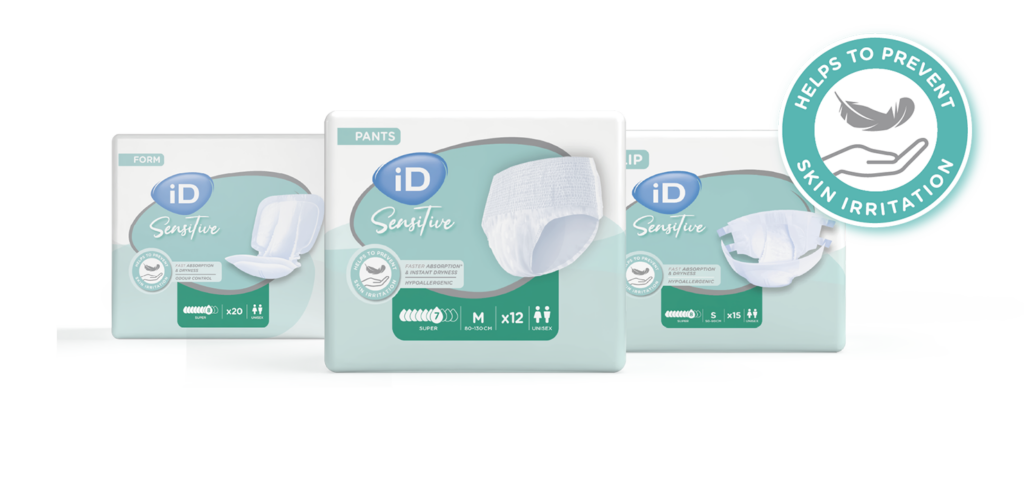
Découvrez notre nouvelle gamme iD Sensitive
Une protection efficace, douce pour la peau
Conçue pour une peau qui aide à prévenir les irritations.